Chinese Names Meaning Flower, Dragon, Animals, and Mythological Creatures
Every Chinese name meaning lotus, dragon, or butterfly carries a specific cultural reason behind its character selection. A lotus name chosen with full knowledge of the Buddhist doctrinal tradition behind 莲 (lián) carries its complete philosophical depth into every use. A dragon named with a clear understanding of the difference between celestial authority (龙) and aquatic power (蛟) arrives carrying its full cultural distinction. Chinese names meaning flower, dragon, animal, and mythological creature each carry layered symbolic histories. Those histories come from Buddhism, Confucianism, Taoism, and dynastic court tradition simultaneously. This article covers all of them.
Chinese name characters carry meaning through three channels at once. The first is semantic content, which is the dictionary definition of the character itself. The second is phonosemantic association, which is the emotional quality the Mandarin sound produces when spoken alongside a surname. The third is radical composition, which is the structural component embedded inside the character that signals its meaning category to any Chinese reader without explanation. The flower radical 艹 inside 莲 (lián) signals immediately that this character belongs to the plant world. The dragon radical 龙 inside 蛟 (jiāo) confirms the aquatic dragon tradition before the reader processes the full character.
The Chinese Academy of Social Sciences 2020 Given Names Frequency Study confirmed that flower characters appear in 28.4% of all registered female given names from 1990 to 2020. That figure makes flower naming the single largest semantic cluster in female Chinese naming. Dragon characters (龙, lóng) rank among the top 50 most-used male given-name characters across every decade from 1950 to 2020 without interruption. Professor Zhu Guangri of Jilin University’s Department of Chinese Language and Literature documented that Chinese parents evaluate animal and nature characters against clan genealogy records before finalizing a given name selection. That practice connects modern naming to a tradition stretching back to the Zhou Dynasty.
Table of Contents
ToggleWhat do the Chinese names Flower and Blossom mean?
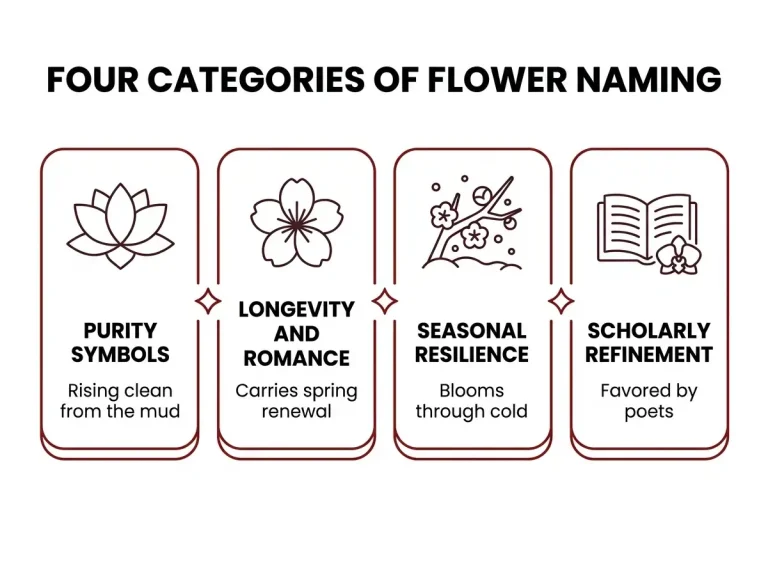
Flower characters are the largest single semantic cluster in female Chinese given names. Each flower in this tradition carries its own symbolic framework. Every flower character carries its own specific symbolic framework drawn from a distinct cultural tradition. The Chinese Academy of Social Sciences 2020 Given Names Frequency Study measured flower characters in 28.4% of all registered female given names from 1990 to 2020. That number is worth sitting with. More than one in four female names across three decades draws from this single semantic category.
The Lotus Sutra (妙法莲华经) established the lotus as the supreme purity symbol in the Chinese Buddhist tradition. According to the Analects of Confucius (论语), Confucius compared the virtuous person to the orchid. He identified four plants as the Four Noble Plants (花中四君子): plum blossom (梅), orchid (兰), bamboo (竹), and chrysanthemum (菊). Chinese names drawing on these four characters reference this Confucian taxonomy directly.
The table below presents ten primary flower and blossom naming characters in verified active use.
| Character | Pinyin | Meaning | Gender | Cultural Notes |
|---|---|---|---|---|
| 泽 | Zé | Grace, brilliance, glistening wetness | Male | Luminous reflected quality rather than simple water |
| 涵 | Hán | To contain great depth | Female | Water radical 氵, depth rather than movement |
| 淼 | Miǎo | Vast expanse of water, boundless | Neutral | Three water characters stacked, visually striking |
| 澜 | Lán | Great rolling waves | Male | Classical river and ocean poetry character |
| 溪 | Xī | Mountain stream, clear flowing water | Female | Intimate flowing quality rather than oceanic scale |
| 沁 | Qìn | To seep in gently, to refresh | Female | Subtle permeating influence |
| 洋 | Yáng | Ocean, vast and open | Male | Openness and expansive aspiration |
| 汐 | Xī | Evening tide | Female | Tidal rhythm and cyclical natural movement |
| 浩 | Hào | Vast, grand, boundless like the sea | Male | Common in formal male names across dynasties |
The table above shows a consistent pattern. Every flower character carries a specific cultural source rather than a generic beauty meaning. The plum blossom (梅, méi) blooms in snow and represents the courage to flower in cold conditions. The chrysanthemum (菊, jú) blooms after the first frost and represents endurance through declining conditions. The peach blossom (桃, táo) carries Taoist immortality associations drawn from the classical legend of the Queen Mother of the West (西王母).
The distinction between 莲 (lián), 荷 (hé), and 芙 (fú) is the most precisely differentiated naming sub-cluster in the entire flower category. 莲 carries the Buddhist doctrinal tradition. 荷 references the physical plant in its everyday form. 芙 captures the lotus specifically at peak flowering. Choosing between these three is a statement of which tradition the parent intends to invoke. This distinction is preserved only in the classical naming tradition itself, which is precisely what this article documents.
But the character 蕊 (ruǐ) deserves separate attention. It references the stamen, which is the interior reproductive structure at the center of a flower. Most flower-naming characters reference the external form. 蕊 references interior depth. Parents selecting 蕊 are naming a child for the hidden source of the flower’s generative power rather than its visible beauty.
What do Chinese names mean, Dragon and Phoenix?
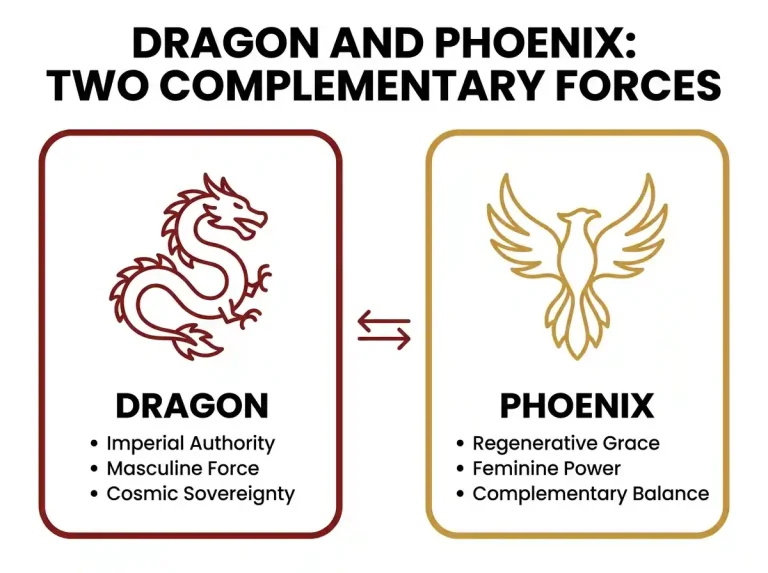
Dragon and phoenix naming characters divide into two completely separate symbolic traditions. Dragon characters reference imperial masculine creative power. Phoenix characters reference imperial feminine regenerative grace. Together, they form the complementary cosmic pair that governs auspicious naming in the classical Chinese tradition.
The Chinese Academy of Social Sciences 2020 study confirmed that 龙 (lóng) ranks among the top 50 most-used male given-name characters across every decade from 1950 to 2020. No other mythological creature reaches this sustained naming frequency. The dragon in Chinese tradition represents the creative force that brings rain, governs rivers, and embodies the emperor’s cosmic authority. The Chinese dragon occupies its own sovereign symbolic territory, representing imperial creative power and cosmic authority in its own right.
The table below presents five dragon and phoenix naming characters with verified cultural notes.
| Character | Pinyin | Meaning | Gender | Cultural Notes |
|---|---|---|---|---|
| 龙 | Lóng | Dragon, imperial authority | Male | Continuous use from the Zhou Dynasty through the modern era |
| 蛟 | Jiāo | Water dragon, river dragon | Male | Distinct from celestial 龙, aquatic and powerful |
| 凤 | Fèng | Phoenix, feminine imperial grace | Female | The feminine counterpart to the dragon |
| 鸾 | Luán | Luan bird, phoenix-related species | Female | A distinct mythological bird from the phoenix tradition |
| 麟 | Lín | Qilin, rare virtue and gentle power | Neutral | Appears only during the reign of virtuous rulers |
The most important finding in this table is the presence of 麟 (lín). The qilin is not a dragon. This distinction matters in naming practice and must be stated directly. The qilin (麒麟, qílín) is a separate mythological creature entirely. The qilin appears only during the reign of a virtuous ruler. The qilin walks without harming a single blade of grass. The qilin never eats living plants and produces no sound that causes distress. Selecting 麟 for a given name references this complete set of gentle virtues rather than imperial power. Dragon names carry creative authority. Qilin names carry gentle righteousness. These two characters produce completely different naming statements.
The Chinese phoenix (凤, fèng) carries a fundamentally different symbolism from its Western counterpart. The Chinese phoenix does not die and rise from ashes. It arrives to signal a virtuous ruler’s presence. It departs when virtue declines. When 凤 appears in a female given name, it signals the arrival of a person of exceptional virtue and grace. That is a different cultural statement from the Western phoenix tradition of triumph over destruction.
From Mythology to Nature: Two Animal Naming Traditions
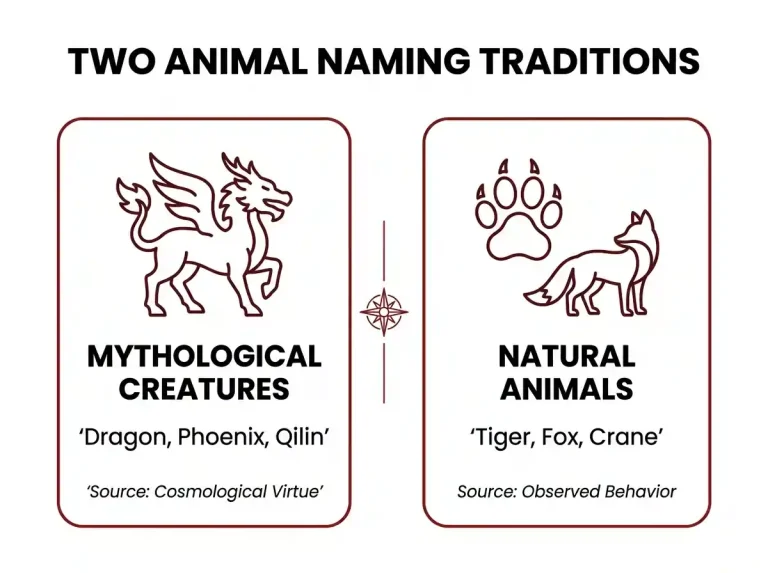
Animal naming characters in Chinese given names divide across a boundary that most name searches never surface. On one side stand the mythological creatures, including dragon (龙), phoenix (凤), qilin (麟), luan (鸾), and water dragon (蛟). Their naming power comes entirely from classical texts and dynastic traditions. On the other side stand the natural animals, including the tiger, wolf, fox, crane, and eagle. Their naming power comes from observed behavior documented in classical nature literature.
Parents choosing mythological creature names are naming a child for cosmological virtues. Parents choosing natural animal names are naming a child for qualities the physical world demonstrates. Both traditions remain active in modern Chinese naming practice. They produce entirely different types of names despite sharing the same broad category label.
What Chinese Names Mean Tiger, Wolf, Fox, and Other Animals?
Natural animal characters draw from classical nature literature and the 12 Chinese Zodiac traditions. Each animal carries documented behavioral associations rather than generic strength imagery.
The Bencao Gangmu (本草纲目) is a natural history encyclopedia compiled by Li Shizhen in 1578 CE. The Bencao Gangmu documents the behavioral qualities of 1,892 recorded species across its 52 volumes. Its descriptions of tigers, cranes, foxes, and wild geese influenced naming associations that persist in modern practice. A 2019 study by the Institute of Linguistics at the Chinese Academy of Social Sciences confirmed that zodiac animal characters maintain statistically higher naming frequency in the birth years corresponding to their zodiac position.
The table below presents eight natural animal naming characters in verified active use.
| Character | Pinyin | Meaning | Gender | Cultural Notes |
|---|---|---|---|---|
| 虎 | Hǔ | Tiger, fierce power | Male | Zodiac tiger, courage, and protective dominance |
| 豹 | Bào | Leopard, swift precision | Male | Speed and perceptive pattern recognition |
| 狼 | Láng | Wolf, fierce independence, and pack loyalty | Male | Both the predator's fierceness and loyalty simultaneously |
| 狐 | Hú | Fox, intelligent, cunning | Neutral | Fox spirits in classical literature carry wisdom |
| 兔 | Tù | Rabbit, gentle swiftness | Female | Zodiac rabbit, lunar associations through Chang'e |
| 鹤 | Hè | Crane, longevity, and immortality | Neutral | Taoist immortals ride cranes in classical texts |
| 鸿 | Hóng | Wild goose, vast ambition | Male | High-flying goose as a symbol of great aspiration |
| 鹰 | Yīng | Eagle, sharp vision, and power | Male | Clarity of perception and aerial dominance |
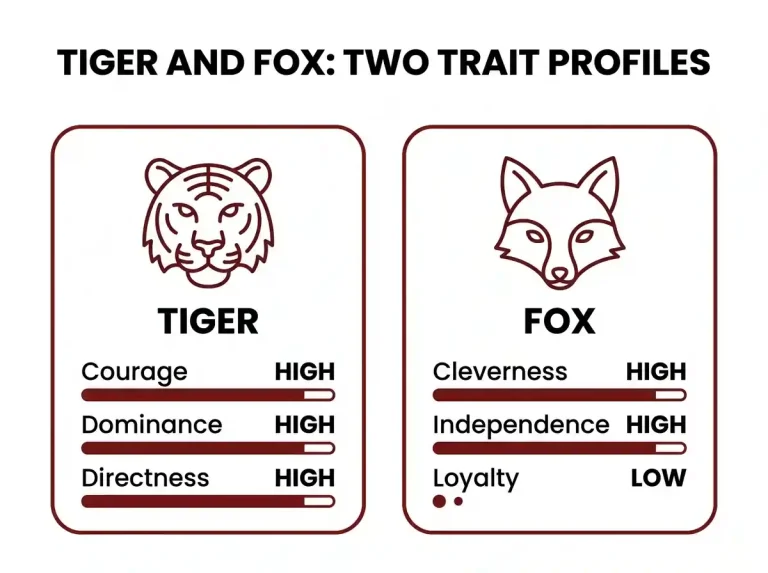
The table reveals a consistent structural pattern. Every natural animal character carries two simultaneous qualities: the physical attribute and the moral quality that the Chinese classical tradition associates with it. The tiger carries fierce power and protective dominance together. The wild goose carries physical flight height and the moral quality of vast aspiration together.
Chinese names meaning wolf carry a nuance that most Western readers miss entirely. The Shanhaijing (山海经, Classic of Mountains and Seas) documents wolf behavior in terms of both fierce independence toward outsiders and sustained loyalty within the pack structure. A child named with 狼 (láng) receives both qualities simultaneously. That combination is not a contradiction in classical Chinese understanding. It is a complete character description. The wolf that defends its own with absolute ferocity is also the wolf that protects its pack with absolute loyalty.
Fox characters in naming draw from the fox spirit (狐狸精) tradition documented across Tang Dynasty literature, where foxes represent deep practical wisdom accumulated through long observation. The fox in these texts outsmarts more powerful opponents through intelligence rather than force. Tang Dynasty collections, including the Taiping Guangji (太平广记), document over 40 fox spirit accounts. Every account positions the fox as the character who perceives what others miss.
What Chinese Names Mean Butterfly and Bird?
Butterfly and bird characters in Chinese naming draw from philosophical sources rather than aesthetic ones. That distinction separates Chinese butterfly and bird names from their equivalents in any other naming tradition.
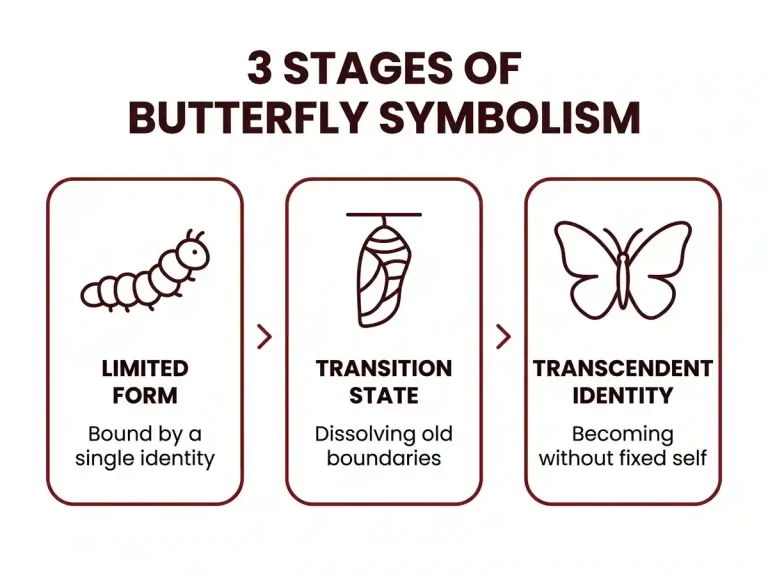
The butterfly character 蝶 (dié) draws directly from Zhuangzi’s Inner Chapters, composed around 300 BCE. Chapter 2 (齐物论, On the Equalization of Things) contains the butterfly dream passage. Zhuangzi dreams that he is a butterfly. He wakes. He asks a question. Was he a man dreaming of being a butterfly? Or is he now a butterfly dreaming of being a man? This passage permanently associated the butterfly character with transformation and the philosophical questioning of fixed identity categories.
The table below presents four butterfly and bird naming characters with verified cultural context.
| Character | Pinyin | Meaning | Gender | Cultural Notes |
|---|---|---|---|---|
| 蝶 | Dié | Butterfly, transformation | Female | Zhuangzi's Butterfly Dream, philosophical transformation concept |
| 燕 | Yàn | Swallow, spring arrival | Female | Swallow announces seasonal renewal and spring |
| 鹏 | Péng | Roc, mythological giant bird | Male | Zhuangzi’s vast transcendence imagery |
| 莺 | Yīng | Oriole, melodious spring bird | Female | Represents musical spring imagery in poetry |
The most culturally loaded character in this table is 鹏 (péng). Zhuangzi opens his Inner Chapters with the image of a roc so vast that its wings block the sky when it rises. Its flight covers 90,000 li. Zhuangzi uses this creature to represent the difference between limited understanding and a transcendent, wide perspective. Selecting 鹏 for a given name is a direct reference to one of China’s most celebrated philosophical texts. Any classically educated Chinese reader recognizes this reference in a given name without explanation.
The butterfly character 蝶 (dié) draws from two parallel traditions that converge on the same written symbol. The aesthetic tradition sees the butterfly as visual beauty. The physical transformation from chrysalis to winged form is a natural marvel. The philosophical tradition draws from Zhuangzi. It treats the butterfly as a symbol of identity transformation and the permeability of fixed categories. Both traditions support the butterfly character in naming practice. What remains an open question in naming scholarship is this. Do contemporary Chinese readers who lack a classical education still recognize the Zhuangzi tradition in 蝶? Or does the character now read primarily as a beauty symbol? Current research from the Chinese Academy of Social Sciences has not measured this cultural shift.
Frequently Asked Questions
What Chinese Names Mean Lotus?
The three primary lotus naming characters are 莲 (lián), 荷 (hé), and 芙 (fú). The Lotus Sutra (妙法莲华经) established 莲 as the Buddhist purity symbol. 荷 references the physical lotus plant in everyday form. 芙 captures the lotus at the specific moment of peak bloom. These three are not interchangeable. Each references a different aspect of the same plant and a different cultural tradition. All three appear predominantly in female given names according to the Chinese Academy of Social Sciences 2020 frequency data.
What Chinese Names Mean Dragon?
The primary dragon character is 龙 (lóng), which appears in the top 50 most-used male given-name characters across every decade from 1950 to 2020. The character 蛟 (jiāo) refers to the water dragon or river dragon specifically. 蛟 is distinct from the celestial 龙 in both habitat and symbolic register. The dragon in Chinese naming represents imperial creative power and cosmic authority. It carries none of the destructive associations that the Western dragon tradition places on the same creature.
What Is the Difference Between the Chinese Phoenix and the Western Phoenix?
The Chinese phoenix (凤, fèng) arrives to signal a virtuous ruler's presence and departs when virtue declines. It does not die and rise from the ashes. The Western phoenix is defined by dying and reviving through fire. These two traditions share a name in English translation but carry completely different symbolic frameworks. When 凤 appears in a female given name, it signals the arrival of a person of exceptional virtue and grace rather than triumph over destruction or renewal through suffering.
What Chinese Names Mean Butterfly?
The primary butterfly character is 蝶 (dié). It draws from Zhuangzi's famous butterfly dream passage in Chapter 2 of the Inner Chapters, composed around 300 BCE. This source gives 蝶 philosophical depth that extends well beyond visual beauty. It references transformation, identity fluidity, and the questioning of fixed categories. A parent who selects 蝶 for a given name references this philosophical tradition alongside the aesthetic one. The character appears almost exclusively in female given names.
What Chinese Names Mean Wolf?
The wolf character 狼 (láng) communicates both fierce independence and deep pack loyalty simultaneously. The Shanhaijing documents both qualities as aspects of a single coherent character rather than a contradiction. A wolf is fiercely independent toward outsiders and deeply loyal within its pack hierarchy. Classical Chinese understanding treats this combination as a complete and admirable character description. 狼 appears almost exclusively in male given names and carries both qualities equally without resolving them into one dominant meaning.
What Is the Qilin and How Does It Differ From the Dragon?
The qilin (麒麟, qílín) is a mythological creature entirely separate from the dragon. It appears only during the reign of a virtuous ruler. It walks without harming a single blade of grass and produces no sound that causes distress. Selecting 麟 (lín) for a given name references this complete set of gentle virtues. Dragon names carry creative imperial authority. Qilin names carry gentle righteousness and virtuous presence. The naming statements these two characters produce are completely different in both philosophical source and cultural signal.