Chinese Names Meaning Strength, Wisdom, Peace, Jade, and Beauty
Most name guides give lists. This one gives meaning. The deepest Chinese naming tradition does not come from the natural world. It comes from the classical philosophical tradition, from the Analects of Confucius, the Book of Changes, and Tang Dynasty poetry. A name selected with a deep understanding of its cultural source is a name chosen in its full power. Chinese names meaning strength, wisdom, peace, jade, and beauty each carry a specific philosophical weight that no translation fully captures.
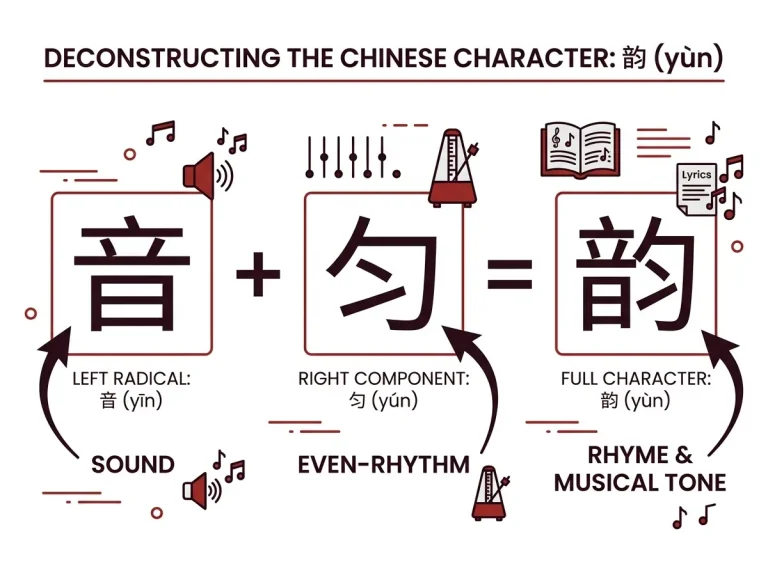
Chinese name characters carry meaning through three channels at once. The first is semantic content, which is the character’s dictionary meaning. The second is phonosemantic association, which is the emotional quality the Mandarin sound produces when spoken beside a surname. The third is radical composition, the structural element within a character that instantly signals its meaning category to every Chinese reader. The heart radical 心 inside 慧 (huì) signals to any reader that this wisdom grows from emotional depth. No explanation is needed.
According to the Ministry of Public Security 2022 census data, peace characters (安, 宁, 静) ranked in the top 50 most-registered given-name characters across every decade from 1950 to 2020. No other semantic category holds this record. The Chinese Academy of Social Sciences 2020 frequency study confirmed that jade characters (玉, 琳, 瑾) appear in the top 100 female given-name characters across every decade from 1949 to 2020 without exception. Both findings point toward one conclusion: virtue-based naming in China is not a trend. It is a structural tradition.
Table of Contents
ToggleChinese Names Meaning Strength, Wisdom, Peace, Jade, and Beauty
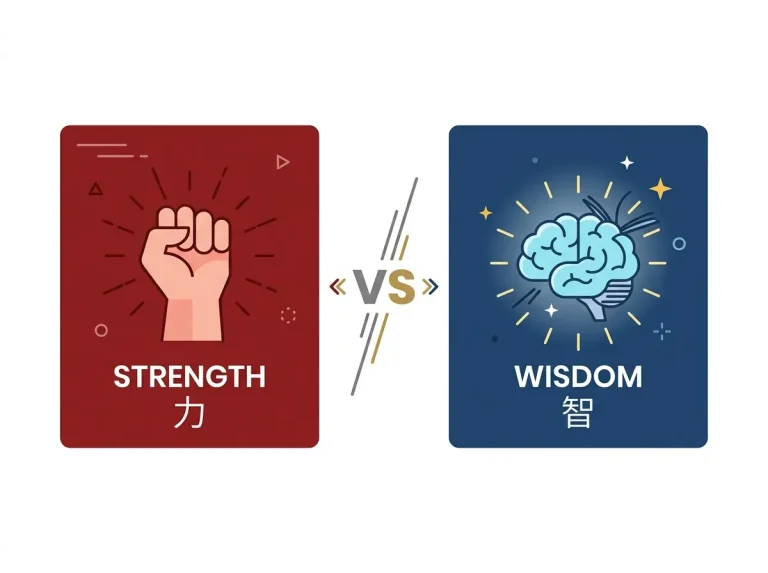
Strength names in Chinese are divided into two traditions. Martial strength characters such as 武 (wǔ) reference physical power, battlefield courage, and protective force. Moral fortitude characters such as 毅 (yì) reference inner resolve, which is the quality that holds direction under pressure without bending. Choosing between these two traditions is a precise cultural statement.
Sun Tzu’s Art of War (孙子兵法) defines superior military virtue as the capacity to win without fighting. This framing distinguishes Chinese warrior characters from simple aggression imagery. A strong character in Chinese naming carries the defender-of-community meaning more reliably than the aggressor-conqueror meaning. That distinction matters when choosing between 武 (outward force) and 毅 (inward resolve).
The following table presents the nine primary strength and warrior naming characters in active use.
| Character | Pinyin | Meaning | Gender | Cultural Notes |
|---|---|---|---|---|
| 勇 | Yǒng | Brave, morally courageous | Male | Confucian virtue of moral courage, distinct from physical strength |
| 强 | Qiáng | Strong, forceful, powerful | Male | Physical and social dominance |
| 武 | Wǔ | Martial, military strength | Male | The martial arts tradition, as in wushu (武术) |
| 毅 | Yì | Resolute, unwavering | Male | Inner strength that does not bend under pressure |
| 刚 | Gāng | Hard, unyielding, upright | Male | Tempered metal quality, rigid principled integrity |
| 豪 | Háo | Heroic, bold, magnanimous | Male | Heroism with a generous social dimension |
| 骁 | Xiāo | Brave and skilled in battle | Male | Military excellence in the specific battlefield context |
| 捷 | Jié | Swift and victorious | Neutral | Victory is achieved through speed and agility |
| 胜 | Shèng | To overcome, to triumph | Male | Victory as a sustained and achieved state |
What Chinese Names Mean Wisdom and Intelligence?
The Chinese naming tradition identifies three distinct types of wisdom. Emotional wisdom (慧), philosophical wisdom (哲), and perceptive wisdom (聪) emerge from different human faculties and produce different outcomes in character development. Most Western naming systems treat these as synonyms.
According to the Analects of Confucius (论语), wisdom is a practice applied across multiple domains simultaneously. Confucius identified three primary expressions: intellectual analysis, moral discernment, and perceptive listening. Chinese wisdom characters map directly onto this Confucian framework. The radical composition of each character makes the mapping visible to any reader who knows the script.
The table below presents eight wisdom and intelligence characters verified for active naming use.
| Character | Pinyin | Meaning | Gender | Cultural Notes |
|---|---|---|---|---|
| 慧 | Huì | Wisdom from emotional depth | Female | Heart radical 心 at base, wisdom grows from feeling |
| 哲 | Zhé | Deep philosophical wisdom | Male | Scholar-tradition wisdom, reasoned and principled |
| 聪 | Cōng | Sharp perception, rapid understanding | Neutral | Ear radical 耳 at base, wisdom arrives through listening |
| 睿 | Ruì | Penetrating insight | Male | Wisdom that perceives what is not yet visible |
| 智 | Zhì | Intelligence, strategic mind | Male | Applied Confucian wisdom in governance and conduct |
| 颖 | Yǐng | Naturally gifted, brilliant | Female | Natural rather than learned excellence |
| 敏 | Mǐn | Perceptive, quick-minded, alert | Neutral | The speed dimension of intelligence |
| 博 | Bó | Broad learning, wide knowledge | Male | Scholarly range rather than single-discipline depth |
The exceptional quality of the character 睿 (ruì) makes it a hidden gem that deserves even greater recognition in standard naming guides. The Shujing (书经, Book of Documents) governance chapters identify 睿 as one of the five cardinal ruler virtues. It names the ability to perceive what has not yet been stated. Parents selecting 睿 reference a classical leadership tradition, not generic intelligence. That is a different naming intention entirely.
What do Chinese names mean? Peace, Purity, and Calm?
Peace and purity characters show the most sustained historical presence of any semantic category in Chinese given naming. The Ministry of Public Security’s 2022 census confirmed this finding. Peace characters (安, 宁, 静, 洁) held positions in the top 50 most-registered given-name characters across every decade from 1950 to 2020. Seven consecutive decades. No other category matches this record.
This stability reflects the Confucian principle of social harmony (和, hé) as the foundational virtue of well-ordered human life. The Analects states that in the practice of the rules of propriety, a natural ease is to be prized above all expressions of ceremonial form. Peace and calm names draw from this philosophical preference for achieved equilibrium over demonstrated dominance.
The table below presents nine peace, purity, and calm characters in active naming use.
| Character | Pinyin | Meaning | Gender | Cultural Notes |
|---|---|---|---|---|
| 安 | Ān | Peace, safety, settled calm | Neutral | Ministry of Public Security 2022: top 10 historical given-name characters |
| 宁 | Níng | Tranquility, internal stillness | Neutral | Paired with 安 as 安宁, doubly reinforced peace |
| 静 | Jìng | Quiet, composed, still | Female | Internal peace rather than external safety |
| 澄 | Chéng | Clear, transparent, purified | Neutral | Water radical 氵, clarity as the definition of purity |
| 洁 | Jié | Clean, pure, morally spotless | Female | Purity of character unspoiled by compromise |
| 纯 | Chún | Pure, undiluted, genuine | Neutral | Purity through absence of contamination |
| 淳 | Chún | Simple and honest nature | Neutral | Purity of an uncomplicated and honest character |
| 雅 | Yǎ | Elegant, refined, cultivated | Female | The Confucian ideal of cultivated personal bearing |
| 和 | Hé | Harmony, accord, peaceful balance | Neutral | The Confucian social harmony principle |
What do Chinese names mean: Jade, Gold, and Color?
Peace and purity characters show the most sustained historical presence of any semantic category in Chinese given naming. The Ministry of Public Security’s 2022 census confirmed this finding. Peace characters (安, 宁, 静, 洁) held positions in the top 50 most-registered given-name characters across every decade from 1950 to 2020. Seven consecutive decades. No other category matches this record.
This stability reflects the Confucian principle of social harmony (和, hé) as the foundational virtue of well-ordered human life. The Analects states that in the practice of the rules of propriety, a natural ease is to be prized above all expressions of ceremonial form. Peace and calm names draw from this philosophical preference for achieved equilibrium over demonstrated dominance.
The table below presents nine peace, purity, and calm characters in active naming use.
| Character | Pinyin | Meaning | Gender | Cultural Notes |
|---|---|---|---|---|
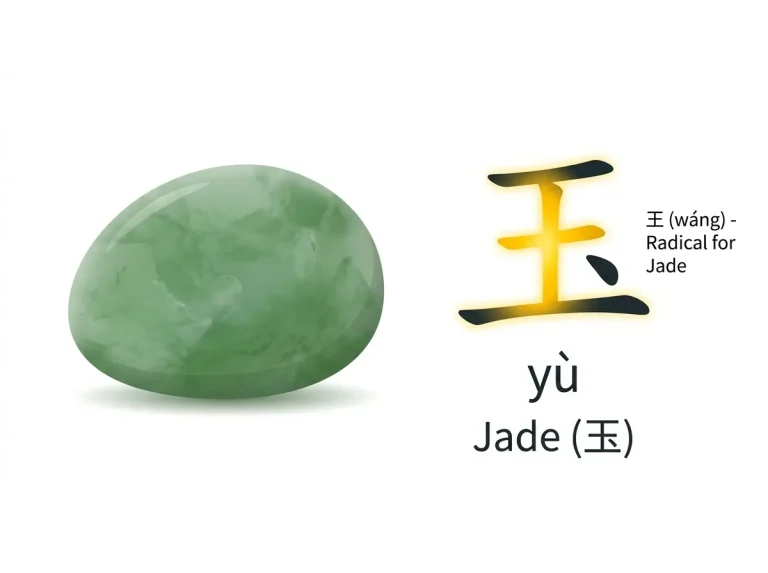
| 玉 | Yù | Jade, moral purity | Female | The foundational jade naming character with unbroken dynasty-to-dynasty use |
| 琳 | Lín | Beautiful jade, precious and rare | Female | Quality jade rather than common jade, rarity implied |
| 瑾 | Jǐn | Fine jade of exceptional quality | Female | The highest grade of jade, excellence through rarity |
| 琬 | Wǎn | Jade tablet used in state ceremonies | Female | Zhou Dynasty administrative and ceremonial jade |
| 珏 | Jué | Two pieces of jade together | Neutral | Paired jade, togetherness, and complementarity |
| 金 | Jīn | Gold, metal, valuable | Neutral | Also, the Metal element in the Five Elements (五行) system |
| 锦 | Jǐn | Brocade, richly patterned silk | Female | Gold-thread weaving, material achievement through craft |
| 朱 | Zhū | Cinnabar red, vermillion | Male | Imperial red, the pigment of seals, lacquerware, and court documents |
| 碧 | Bì | Blue-green jade color, turquoise | Female | The specific color of high-quality jade |
| 皎 | Jiǎo | Brilliant white, moonlike radiance | Female | White as radiance, not the absence of color but its refinement |
Among jade characters, 玉 (yù) shows the longest continuous naming history from Zhou Dynasty records through modern registration data. 琳 (lín) implies rarity and exceptional material quality rather than common jade. 瑾 (jǐn) references the highest certified grade of jade. And 琬 (wǎn) references the specific form of jade tablet used in Zhou Dynasty state ceremonies. Its ceremonial formality gives it a naming register unlike any other jade character.
What Chinese Names Carry Beauty, Music, and Poetic Depth?
The characters that carry the greatest poetic depth in Chinese naming appear rarely in everyday written Chinese. That rarity is not a weakness. Any educated Chinese reader recognizes a rare poetic character in a given name immediately. The selection signals cultural literacy before the person speaks a word.
The compositional principle governing Tang Dynasty poetry governs these names as well. Two elements whose individual meanings produce a third meaning that neither carries alone. The name 星河 (xīnghé) fuses “star” (星) with “river” (河) to produce “the Milky Way.” The name 云霄 (yúnxiāo) pairs “cloud” (云) with “upper reaches of the sky” (霄) to evoke limitless vertical space. Neither character alone reaches the meaning that the combination achieves.
The table below presents ten beauty, music, and poetic depth characters for Chinese given names.
| Character | Pinyin | Meaning | Gender | Cultural Notes |
|---|---|---|---|---|
| 韵 | Yùn | Musical tone, poetic rhythm | Female | The resonance quality that makes music and verse beautiful |
| 音 | Yīn | Sound, musical note | Neutral | Pure sound as a philosophical principle in classical thought |
| 悠 | Yōu | Distant, melodious, leisurely deep | Neutral | The quality of a sound that carries far and lingers |
| 婉 | Wǎn | Gracious, gently yielding beauty | Female | Beauty through accommodating grace rather than force |
| 姿 | Zī | Elegant bearing, graceful form | Female | Beauty of posture and physical presence |
| 晞 | Xī | Dawn light drying dew | Female | Rare; captures one specific moment of natural beauty |
| 玥 | Yuè | A mythical jade pearl | Female | Combines jade quality and lunar quality simultaneously |
| 宸 | Chén | The imperial palace chambers | Male | Literary prestige through architectural grandeur and scale |
| 骞 | Qiān | To soar, to lift high | Male | Han Dynasty explorer Zhang Qian's given name |
| 霏 | Fēi | Falling snow or rain, drifting lightly | Female | Classical poetry imagery of delicate atmospheric motion |
The character 骞 (qiān) carries a specific historical legacy that no other naming character replicates. Zhang Qian (张骞) bore this character as his given name. His journeys, beginning in 138 BCE, opened the Silk Road to Central Asia. Those journeys established China’s first systematic diplomatic contact with civilizations west of the Tarim Basin. Selecting 骞 for a given name silently references one of the most consequential explorers in Chinese history. The reference is legible to every educated Chinese reader without a single word of explanation.
Chinese Names From the Night and Shadow Tradition
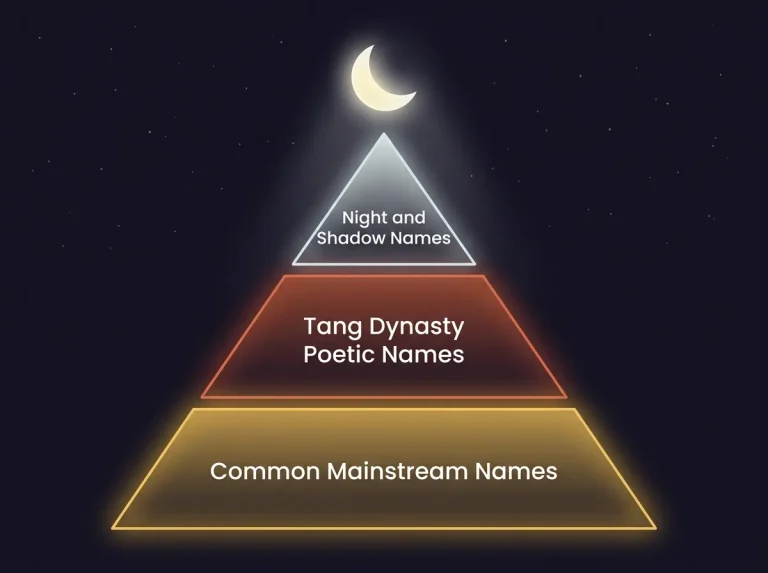
Night and shadow characters in Chinese naming occupy a category entirely separate from dark or taboo characters. The bihui (避讳) system thoughtfully guides families toward harmonious characters that celebrate life, vitality, and well-being. Characters referencing night and shadow belong to the classical poetic tradition. Darkness in this tradition carries aesthetic depth rather than threatening identity.
Tang Dynasty poets used night imagery to represent contemplative solitude. Wang Wei’s landscape poems established 幽 (yōu, secluded) and 玄 (xuán, profound) as markers of refined scholarly sensibility rather than threatening darkness. This pattern appears consistently across the Tang poetry record, not as an exception but as a sustained aesthetic choice across multiple generations of poets.
The table below presents five night and shadow characters drawn from the classical literary tradition.
| Character | Pinyin | Meaning | Gender | Cultural Notes |
|---|---|---|---|---|
| 夜 | Yè | Night, the literary nighttime hour | Neutral | The scholar's quiet hour, literary rather than threatening |
| 影 | Yǐng | Shadow, reflection, image | Neutral | Acceptable in literary and artistic naming contexts |
| 幽 | Yōu | Secluded, quiet, profound depth | Neutral | Deep-forest silence, refined rather than threatening |
| 玄 | Xuán | Profound, mysterious, deep principle | Male | Taoist cosmological depth, the unknowable foundational ground |
| 昏 | Hūn | Twilight, dusk | Neutral | The transitional moment between day and night |
Names combining 夜 or 影 with a brighter companion character produce balanced names that hold the literary night aesthetic without triggering avoidance associations. The combination 星影 (xīng yǐng) places shadow in direct relationship with starlight. The shadow remains present. But it exists alongside light rather than in opposition to it. That relational balance reflects exactly the compositional principle Tang poets used when writing about night scenes.
Frequently Asked Questions
What Is the Difference Between Martial Strength and Moral Fortitude in Chinese Names?
Martial strength characters (武, 勇, 强) reference outward force, including physical power, battlefield courage, and social dominance. Moral fortitude characters (毅, 刚) reference inward resolve, which is the quality that holds direction under pressure without breaking. The Analects of Confucius identifies moral courage (勇) as a virtue entirely distinct from physical strength (强). These two categories are not interchangeable in the classical naming tradition.
Which Chinese Wisdom Character Is the Rarest in Naming Practice?
The rarest wisdom character in active naming use is 睿 (ruì). The Shujing (Book of Documents) identifies 睿 as one of the five cardinal ruler virtues. It names the ability to perceive what has not yet been stated and to understand what is not yet visible. Most standard naming guides do not include it. Its absence from common guides is precisely what makes it a distinguished and culturally precise naming choice.
Why Do Jade Characters Dominate Female Chinese Given Names?
According to the Liji (礼记·聘义), Confucius identified 11 virtues embedded in jade as a material. These include benevolence, wisdom, courage, purity, and endurance, among others. Jade character names allow parents to reference this entire Confucian virtue taxonomy through one written symbol. The Chinese Academy of Social Sciences 2020 study confirmed that jade characters (玉, 琳, 瑾) appear in the top 100 most-used female given-name characters across every decade from 1949 to 2020.
Are Peace Characters Still Common in Modern Chinese Naming?
Yes. The Ministry of Public Security 2022 census data confirms that peace characters (安, 宁, 静) appear in the top 50 most-registered given-name characters across every decade from 1950 to 2020. Seven consecutive decades without interruption. No other semantic category in Chinese naming maintains this level of sustained historical presence. Peace names reflect the Confucian social harmony principle (和, hé), a philosophical preference that has remained active across every major political and cultural shift in modern Chinese history.
What Makes Night and Shadow Characters Acceptable in Chinese Naming?
Night and shadow characters belong to the classical poetic tradition rather than the bihui taboo avoidance system. Characters such as 幽 (yōu, secluded depth), 玄 (xuán, profound mystery), and 影 (yǐng, shadow and reflection) carry refined scholarly associations drawn from Tang Dynasty poetry. Wang Wei's landscape poems established these characters as markers of contemplative intelligence. They are appropriate in naming contexts, especially when paired with a brighter companion character that creates relational balance.
Which Poetic Depth Character Carries the Most Specific Historical Reference?
The character 骞 (qiān) carries the most specific historical reference of any poetic naming character. It is the given name of Zhang Qian (张骞), the Han Dynasty explorer whose journeys beginning in 138 BCE opened the Silk Road to Central Asia. No other character in the Chinese naming tradition carries this specific combination of historical weight and geographic scope. An educated Chinese reader recognizes this reference in a given name without explanation.
What Chinese Names Mean Star?
The four primary star-naming characters are 星 (xīng, star), 辰 (chén, celestial body), 曜 (yào, radiant celestial light), and 昱 (yù, brilliant starlike brightness). The character 辰 carries the most cultural weight. It references both a celestial body and a position in the traditional Chinese time system. The compound name 星河 (xīnghé) fuses "star" with "river" to produce "the Milky Way."
What Chinese Names Mean Moon?
The four primary moon naming characters are 月 (yuè, moon), 皓 (hào, brilliant moonlit white), 晗 (hán, the moment before dawn when moonlight lingers), and 朔 (shuò, the new moon and fresh beginning). The character 晗 is the rarest of the four. It captures one specific transitional moment between moonlight and early dawn light. The Ministry of Public Security 2022 census confirms 月 as the foundational moon-naming character in continuous use across all recorded decades.