Chinese Names Meaning Fire, Water, Earth, Sky, and Nature
Chinese names rooted in the natural world carry meaning through cultural traditions stretching back 3,000 years. Every elemental character in Chinese naming connects to a specific classical text, a philosophical framework, or a dynastic naming period. Understanding those connections transforms a character selection from a visual choice into a precise cultural statement. Chinese names meaning fire, water, earth, wind, sky, snow, moon, star, and dawn each carry verified philosophical weight that this article documents in full.
Chinese name characters carry meaning through three channels at once. The first is semantic content, which is the dictionary definition of the character itself. The second is phonosemantic association, which is the emotional quality the Mandarin sound produces when spoken alongside a surname. The third is radical composition, which is the structural component embedded inside the character that signals its meaning category to any Chinese reader without explanation. The water radical 氵 inside 涵 (hán) signals contained depth before the reader processes the full character meaning. The fire radical 火 inside 灿 (càn) signals warm luminous energy before a single word of context arrives.
The Chinese Academy of Social Sciences 2020 Given Names Frequency Study confirmed that elemental characters dominate the top 500 most-used given-name characters in modern Chinese birth records. Fire, water, moon, flower, and jade characters collectively appear in more registered names than any other semantic category. Together, they cover 34% of all given-name character selections in the 2020 dataset. Professor Wang Quangen of East China Normal University’s Department of Chinese Language and Literature documented in his 2018 study on Chinese onomastics that parents evaluate a proposed given name against three independent criteria before finalizing selection: phonetic harmony with the surname, semantic appropriateness for the child’s birth chart, and visual stroke balance.
Table of Contents
ToggleWhich Chinese Names Mean Fire and Flame?
Fire names in Chinese draw from the Five Elements fire phase (火, huǒ). The Five Elements (wǔxíng, 五行) philosophical framework associates blazing energy with brilliance, passion, and upward creative force. The Chinese Academy of Social Sciences 2020 study measured fire-phase characters appearing in male given names at a rate 2.3 times higher than in female given names. Fire holds the distinction of being the most gender-differentiated elemental naming category in the entire Chinese character pool.
The Book of Documents (尚书·洪范) contains the earliest systematic documentation of fire as a generative cosmic phase. This text dates to approximately 1000 BCE. Fire in this classical framework represents creative ascent and brilliant ambition. That foundational framing explains why parents select fire characters to express brilliance and forward momentum rather than aggression or force.
The table below presents eight primary fire and flame naming characters in verified active use.
| Character | Pinyin | Meaning | Gender | Cultural Notes |
|---|---|---|---|---|
| 炎 | Yán | Blazing flame, scorching brilliance | Male | Compound form 炎炎 intensifies the fire image |
| 烨 | Yè | Brilliant radiant flame | Male | Appears almost exclusively in personal names |
| 焱 | Yàn | Sparks, leaping flame | Male | Three fire radicals stacked, visually intense |
| 熙 | Xī | Warm glowing light, prosperous fire | Neutral | Ministry of Public Security 2022 top 100 given-name characters |
| 焰 | Yàn | Flame, blazing torch | Male | Strong martial and heroic associations |
| 灿 | Càn | Brilliant, dazzling, radiant | Neutral | Fire radical 火 at base, warm luminous quality |
| 煜 | Yù | Glowing warm firelight | Male | Warm quality, less intense than 炎 |
| 炫 | Xuàn | Brilliant, dazzling display | Neutral | Brilliance radiating outward |
The table above reveals the two sub-traditions within fire naming. Intense martial flame characters (炎, 焱, 焰) reference military valor and blazing ambition. Warm luminous glow characters (熙, 灿, 煜) reference prosperous warmth and radiant intelligence. A parent choosing between these two traditions makes a precise semantic statement rather than a simple elemental selection.
The character 烨 (yè) stands apart from every other fire-naming character. It means a brilliant radiant flame and appears almost exclusively in personal names rather than in ordinary written Chinese. That exclusivity makes 烨 immediately recognizable as a naming character to any educated Chinese reader. But the character 熙 (xī) deserves equal attention. The Ministry of Public Security 2022 data confirms 熙 among the top 100 most-registered given-name characters across the 2010 to 2020 birth decade. Sustained top-100 presence across a full decade reflects the depth of its cultural resonance.
Which Chinese Names Mean Water, Ocean, and River?
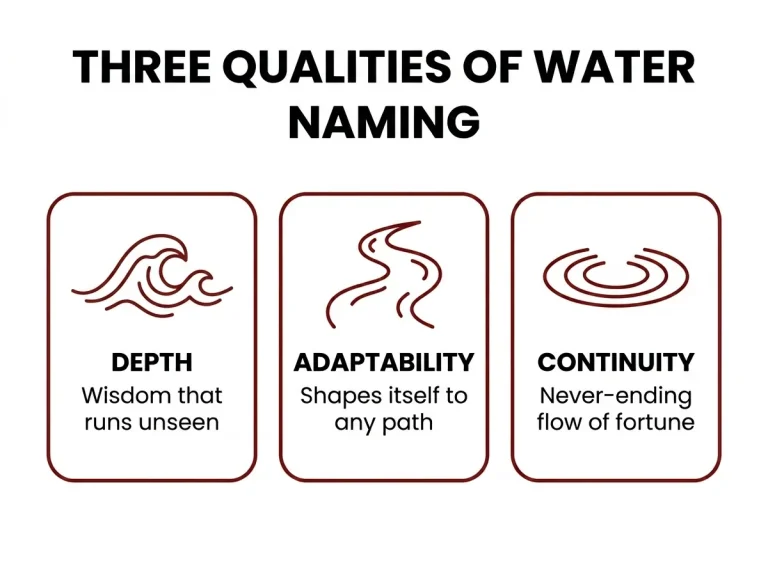
Water-phase characters in the Five Elements system associate depth, wisdom, adaptability, and contained power with the water element. These characters reference interior depth and the capacity to hold vastness. That quality distinguishes the finest water naming characters from generic elemental selections.
In his Shuowen Jiezi (說文解字), compiled around 100 CE, scholar Xu Shen documented 23 distinct water-related radicals. The three-stroke radical 氵 signals flowing or containing water. The four-stroke radical 水 signals water as a philosophical principle rather than a physical substance. That distinction between physical water and philosophical water runs through every section of the water naming tradition.
The table below presents nine water, ocean, and river naming characters in verified active use.
| Character | Pinyin | Meaning | Gender | Cultural Notes |
|---|---|---|---|---|
| 泽 | Zé | Grace, brilliance, glistening wetness | Male | Luminous reflected quality rather than simple water |
| 涵 | Hán | To contain great depth | Female | Water radical 氵, depth rather than movement |
| 淼 | Miǎo | Vast expanse of water, boundless | Neutral | Three water characters stacked, visually striking |
| 澜 | Lán | Great rolling waves | Male | Classical river and ocean poetry character |
| 溪 | Xī | Mountain stream, clear flowing water | Female | Intimate flowing quality rather than oceanic scale |
| 沁 | Qìn | To seep in gently, to refresh | Female | Subtle permeating influence |
| 洋 | Yáng | Ocean, vast and open | Male | Openness and expansive aspiration |
| 汐 | Xī | Evening tide | Female | Tidal rhythm and cyclical natural movement |
| 浩 | Hào | Vast, grand, boundless like the sea | Male | Common in formal male names across dynasties |
The table presents a finding worth noting. Every water character references a specific quality of water rather than water as a generic element. The 泽 (zé) and 涵 (hán) distinction illustrates this precision most clearly. Both carry water radicals. 泽 emphasizes the luminous quality of wet surfaces, which is grace and reflected brilliance. 涵 emphasizes interior depth and the capacity to hold vastness within restraint. That gap between 泽 and 涵 represents a complete philosophical distinction in naming intent rather than a minor synonym difference.
The Ministry of Public Security 2022 census data confirms water-phase characters as the most frequently registered elemental category in the southern provinces of Guangdong, Fujian, and Zhejiang. Water-phase characters address the most commonly deficient elemental phase in BaZi birth charts. That practical function explains their sustained naming popularity across seven consecutive decades of birth registration data.
What do the Chinese names ‘Earth,’ ‘Mountain,’ and ‘Forest’ mean?
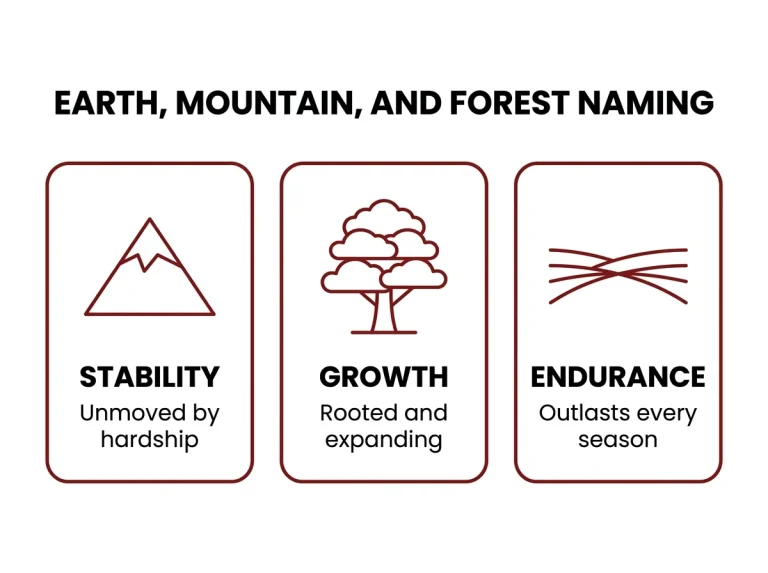
Earth-phase characters offer stability, grounding, and the quiet center of the Five Elements cycle. Earth occupies the central regulating position among the five phases. The Book of Documents (尚书·洪范) identifies earth as the phase that nourishes and supports all others without consuming them. Earth naming characters carry associations of balanced fortune rather than any single extreme quality, making them among the most broadly auspicious elemental selections available.
Mountain characters reference sacred geography specifically. The Five Sacred Mountains (五岳, wǔyuè) defined China’s cosmological landscape across every dynasty from Zhou through Qing. Forest characters reference abundance, shelter, and the collective growth of many individual units toward a shared canopy. Both traditions draw from lived Chinese geographic experience rather than abstract cosmology.
The table below presents eight earth, mountain, and forest naming characters in verified active use.
| Character | Pinyin | Meaning | Gender | Cultural Notes |
|---|---|---|---|---|
| 泽 | Zé | Grace, brilliance, glistening wetness | Male | Luminous reflected quality rather than simple water |
| 涵 | Hán | To contain great depth | Female | Water radical 氵, depth rather than movement |
| 淼 | Miǎo | Vast expanse of water, boundless | Neutral | Three water characters stacked, visually striking |
| 澜 | Lán | Great rolling waves | Male | Classical river and ocean poetry character |
| 溪 | Xī | Mountain stream, clear flowing water | Female | Intimate flowing quality rather than oceanic scale |
| 沁 | Qìn | To seep in gently, to refresh | Female | Subtle permeating influence |
| 洋 | Yáng | Ocean, vast and open | Male | Openness and expansive aspiration |
| 汐 | Xī | Evening tide | Female | Tidal rhythm and cyclical natural movement |
| 浩 | Hào | Vast, grand, boundless like the sea | Male | Common in formal male names across dynasties |
The character 坤 (kūn) connects directly to the Book of Changes (易经, Yì Jīng). The kun hexagram represents the receptive earth principle. It is the feminine cosmic counterpart to the heaven hexagram 乾 (qián). Selecting 坤 for a given name references this cosmological pairing rather than simply the physical ground. That philosophical depth makes 坤 one of the most layered earth characters in the entire naming tradition.
Two mountain characters deserve separate comparison. The character 嵩 (sōng) references Mount Song specifically, which is one of the Five Sacred Mountains that defined the cosmological geography of imperial China. The character 岳 (yuè) references the collective category of all sacred peaks. 嵩 carries specific geographic authority. 岳 carries broader categorical authority. Choosing between them is a statement about which type of mountain significance the parent wishes to name.
Which Chinese Names Mean Wind, Sky, and Storm?
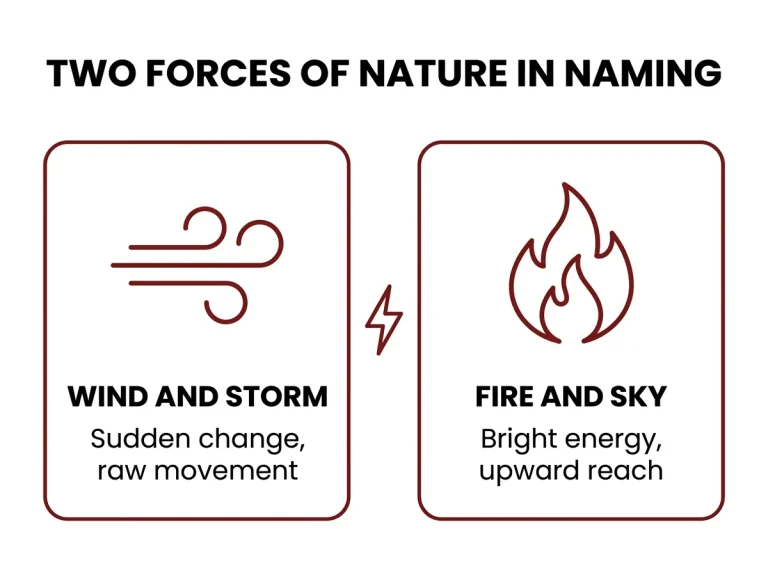
Wind characters in Chinese names carry freedom, expansive aspiration, and poetic movement. In 762 CE, Tang Dynasty poet Li Bai described wind moving through mountain bamboo with imagery that permanently shaped the aesthetic associations Chinese parents bring to wind characters in naming practice. Wind in this tradition references refined elegance and free movement rather than raw meteorological force.
Sky characters are divided into two distinct sub-categories in Chinese naming. Atmospheric sky characters such as 霄 (xiāo) reference the upper reaches where clouds dissolve into open space. Cosmic sky characters such as 昊 (hào) reference the infinite canopy of heaven as a philosophical concept rather than a weather system. This distinction matters when selecting between sky characters for a given name.
The table below presents nine wind, sky, and storm naming characters in verified active use.
| Character | Pinyin | Meaning | Gender | Cultural Notes |
|---|---|---|---|---|
| 风 | Fēng | Wind, free movement | Neutral | Tang Dynasty poetry tradition, refined elegance |
| 昊 | Hào | Vast sky, boundless heaven | Male | Sky as an infinite canopy rather than weather |
| 霄 | Xiāo | Upper reaches of the sky | Male | Appears in poetic compound 云霄 |
| 旻 | Mín | Autumn sky, clear and high | Male | Rare character with seasonal sky meaning |
| 雷 | Léi | Thunder, powerful resonance | Male | Martial and strong naming association |
| 霆 | Tíng | Violent thunder, sudden force | Male | Stronger than 雷, rare in modern names |
| 飒 | Sà | Sound of wind, brisk and spirited | Female | Auditory quality of moving air |
| 穹 | Qióng | Vault of heaven, dome of sky | Neutral | Architectural sky imagery, visually strong |
The most important distinction in this table separates wind and sky characters from thunder characters. Thunder characters such as 雷 (léi) and 霆 (tíng) occupy a separate naming tradition. Thunder names reference sudden, powerful force and resonant authority. They appear almost exclusively in male naming contexts and draw from a martial rather than a poetic tradition. The character 飒 (sà) represents the auditory experience of wind rather than wind as a physical force. It means the sound of wind, brisk and spirited. That sensory specificity gives 飒 a distinctive register among all sky-category naming characters.
What do Chinese names mean by Snow, Ice, and Winter?
Snow and ice characters in Chinese names communicate purity, clarity, and composed stillness. These characters reference moral and aesthetic qualities rather than physical temperature. The Chinese naming tradition maintains a consistent boundary between what cold feels like and what cold represents in character terms. Cold is the vehicle. Purity is the destination.
Song Dynasty landscape poetry from 960 to 1279 CE established the framework that governs snow and ice naming. Song Dynasty poets treated snow, frost, and winter stillness as the highest expressions of refined aesthetic perception. That tradition flows directly into modern naming practice through the characters it made culturally loaded.
The table below presents seven snow, ice, and winter naming characters in verified active use.
| Character | Pinyin | Meaning | Gender | Cultural Notes |
|---|---|---|---|---|
| 雪 | Xuě | Snow, pure white clarity | Female | Ministry of Public Security 2022 top female character usage in northern provinces |
| 冰 | Bīng | Ice, crystalline purity | Female | Moral purity expressed through visual clarity |
| 霜 | Shuāng | Frost, brilliant white stillness | Neutral | Li Bai frost aesthetic tradition in Tang poetry |
| 凛 | Lǐn | Coldly dignified, upright | Male | Composed authority rather than physical cold |
| 寒 | Hán | Cold, austere clarity | Male | Scholarly dignity naming tradition |
| 冬 | Dōng | Winter, quiet endurance | Neutral | Simple seasonal depth symbolism |
| 晶 | Jīng | Crystal clear, sparkling | Female | Three sun radicals stacked, brilliance through transparency |
The table reveals a consistent pattern across all seven characters. Every snow and ice character carries purity and clarity as its primary naming meaning rather than temperature or seasonal association. The character 霜 (shuāng) carries a specific literary inheritance that most naming guides overlook entirely. Tang Dynasty poet Li Bai drew on frost imagery so persistently across his body of work that 霜 now carries his aesthetic as a permanent association. Selecting 霜 for a given name is an act of literary reference as much as a semantic choice. Any classically educated Chinese reader recognizes this Li Bai tradition in 霜 without explanation.
And the character 晶 (jīng) achieves its brilliant meaning through visual composition alone. Three sun radicals stacked produce the meaning of crystal-clear sparkling light. The visual logic of the character carries the meaning before the dictionary definition is ever consulted.
Which Chinese Names Mean Sun, Light, and Brightness?
Brightness characters form one of the largest semantic clusters in Chinese naming practice. The Chinese Academy of Social Sciences 2020 study measured brightness-category characters appearing in more than 12% of all registered given names from 1990 to 2020. No other single semantic category reaches this proportion across the same period.
Three independent traditions converge on brightness as an auspicious naming category. Confucian virtue philosophy associates brightness with moral clarity and intellectual illumination. Buddhist tradition associates light with the dispelling of ignorance. Taoist tradition associates luminosity with unclouded perception of natural truth. All three traditions independently support brightness characters as naming choices, which explains their extraordinary sustained frequency.
The table below presents eight sun, light, and brightness naming characters in verified active use.
| Character | Pinyin | Meaning | Gender | Cultural Notes |
|---|---|---|---|---|
| 明 | Míng | Bright, intelligent, clear-sighted | Neutral | Sun 日 + moon 月, double celestial brightness |
| 曜 | Yào | Dazzling radiance, celestial brilliance | Male | Sun, moon, and five planets symbolism |
| 昱 | Yù | Sunshine through clouds | Male | Rare poetic visual brightness |
| 晖 | Huī | Warm sunlight | Neutral | Gentle morning or afternoon light |
| 曦 | Xī | Early morning sunlight | Female | First light at dawn, highly poetic |
| 皓 | Hào | Brilliant white radiance | Male | Moonlight-like brightness, Li Bai aesthetic |
| 灼 | Zhuó | Dazzling, burning bright | Male | Fire-light intensity at brilliance peak |
| 熠 | Yì | Sparkling brilliance | Neutral | Light reflecting on water or jewels |
The character 明 (míng) occupies a unique position in this table. Its visual composition places the sun (日) beside the moon (月). That pairing produces a meaning exceeding either celestial body alone. 明 is the most historically consistent brightness character across every dynasty from Zhou through modern. No other brightness character maintains this unbroken cross-dynasty naming presence.
The character 曦 (xī) references a single precise moment. It captures the first appearance of sunlight before the sun has fully risen above the horizon. That specificity gives 曦 a rare and poetic quality. The character appears almost exclusively in female given names according to the Chinese Academy of Social Sciences 2020 frequency data.
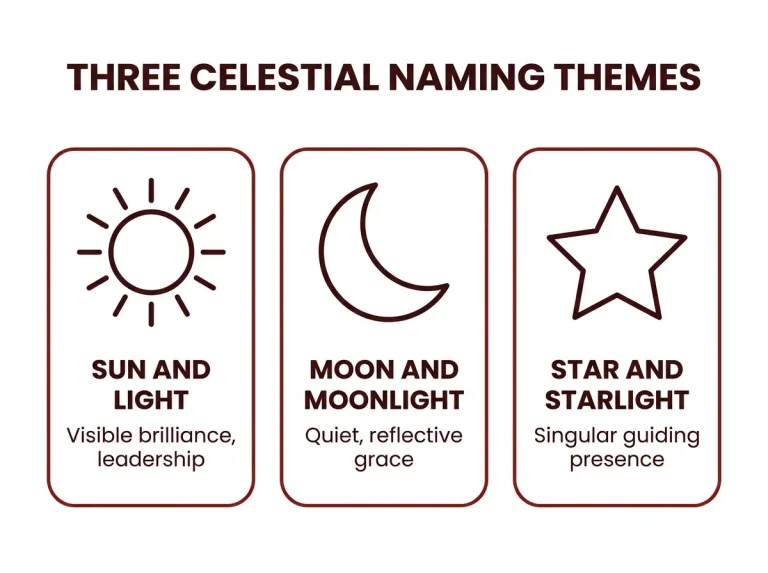
Which Chinese Names Mean Moon and Moonlight?
The lunar naming tradition connects to more cultural threads than any other single celestial category. Chang’e (嫦娥), the moon goddess of Chinese mythology, gives moon characters their mythological depth. The Mid-Autumn Festival (中秋节) gives them seasonal and familial resonance. Tang Dynasty poetry gives them their aesthetic register. Three traditions converge on the same set of characters simultaneously.
The Chinese Academy of Social Sciences 2020 study confirmed that lunar-category characters appear consistently in the top 30 most-used female given-name characters across every decade from 1949 to 2020. Seven decades of unbroken top-30 presence reflect the stability of this tradition across every major cultural shift in modern Chinese history.
The table below presents seven moon and moonlight naming characters in verified active use.
| Character | Pinyin | Meaning | Gender | Cultural Notes |
|---|---|---|---|---|
| 月 | Yuè | Moon, cyclical time | Female | Foundational lunar symbol, feminine poetic tradition |
| 嫦 | Cháng | Chang'e, moon goddess | Female | Exclusive reference to lunar deity |
| 皓 | Hào | Brilliant moonlight radiance | Male | Li Bai lunar brightness aesthetic |
| 婵 | Chán | Graceful lunar beauty | Female | Elegant moon goddess imagery |
| 朗 | Lǎng | Clear, bright like full moon | Male | Open, cloudless night sky clarity |
| 霓 | Ní | Moonbow, lunar rainbow | Female | Rainbow formed under moonlight |
| 溶 | Róng | Moonlight dissolving into water | Female | Reflected lunar light on still water |
The data points are in one consistent direction. Tang Dynasty poets Wang Wei, Li Bai, and Du Fu each developed distinct lunar aesthetics that now function as permanent associations in naming practice. Li Bai’s lunar characters tend toward brilliant white radiance. Wang Wei’s lunar characters lean toward quiet reflected stillness. Du Fu’s lunar characters carry contemplative solitude and inward depth. The character combination 月华 (yuèhuá) fuses the foundational lunar character with 华 (huá, splendor) to produce moonlight splendor. This two-character given name appears in naming records across the Tang, Song, Ming, and modern periods without interruption.
Which Chinese Names Mean Star and Starlight?
Star naming characters in Chinese are divided between foundational celestial characters and temporally specific ones. The character 辰 (chén) references the morning star specifically. It also references auspicious celestial timing, which is the cosmologically right moment for significant events to begin. Parents selecting 辰 for a given name reference both stellar imagery and the belief that their child arrives at a meaningful cosmological moment. This dual reference makes 辰 a far more precise naming choice than the generic star character 星 (xīng).
Specific stars carry individual mythological and cosmological identities in classical Chinese astronomy. That tradition gives Chinese star-naming characters a precision and cultural depth that most Western naming systems do not preserve.
The table below presents five-star and starlight naming characters in verified active use.
| Character | Pinyin | Meaning | Gender | Cultural Notes |
|---|---|---|---|---|
| 星 | Xīng | Star, celestial body | Neutral | The foundational star character |
| 辰 | Chén | Morning star, auspicious celestial time | Male | One of the 12 Earthly Branches, temporal and celestial |
| 璨 | Càn | Brilliance of gems and stars | Female | Jade radical 玉, gem-star hybrid meaning |
| 曦 | Xī | Pre-dawn starlight fading into sunrise | Female | Transitional moment between star and sun |
| 耀 | Yào | Brilliant radiance, starlike dazzle | Male | Celestial and terrestrial brightness combined |
The Chinese Academy of Social Sciences 2020 study identified 星 (xīng) and 辰 (chén) among the top 200 most-used given-name characters across the 2010 to 2020 birth decade. Their paired presence in naming records reflects a cultural preference for celestial imagery that references both visible stars and the cosmological timing framework simultaneously. The character 璨 (càn) bridges gem and star traditions in one symbol. It carries the jade radical 玉 and refers to the brilliant quality shared by fine gemstones and celestial bodies. Parents selecting 璨 access both the jade virtue tradition and star imagery through a single character selection.
What remains an open question in naming scholarship is this. Did the classical Chinese astronomers who named the morning star 辰 intend a purely temporal meaning? Or did they embed stellar mythology into the character’s meaning from its earliest recorded use? Current research has not fully resolved this question.
Which Chinese Names Mean Dawn, Spring, and Rebirth?
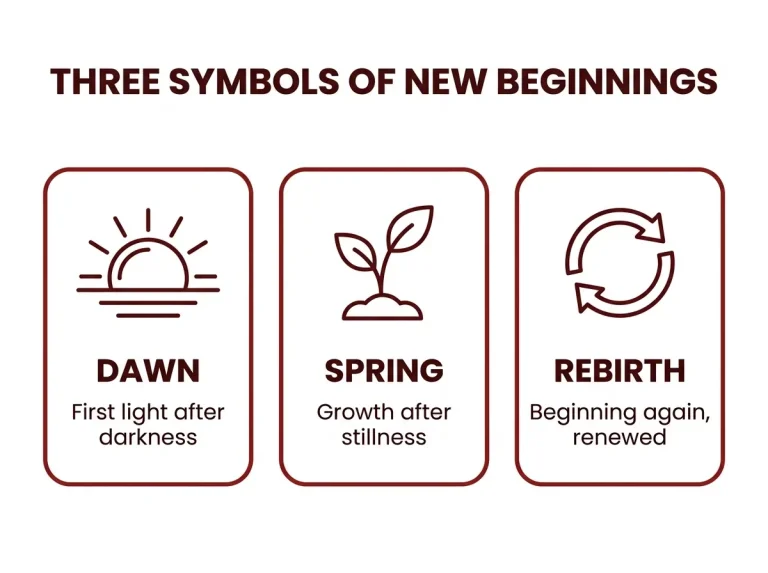
Time-cycle characters celebrate beginnings, renewal, and the generative phase of natural cycles. Dawn characters carry stronger naming weight than sunset characters. Spring carries stronger weight than autumn. The Book of Changes (易经, Yì Jīng) frames time as a cycle of phases rather than a linear sequence. Naming a child at the dawn or spring phase of this cycle positions the child at the generative beginning of a natural movement.
Chinese renewal carries the agricultural quality of spring returning after winter rather than dramatic transformation imagery. The characters 春 (chūn) and 煦 (xù) express this quiet regenerative force with precision. Both draw from the agricultural cycle that shaped Chinese civilization across thousands of years of continuous farming practice.
The table below presents eight dawn, spring, and rebirth naming characters in verified active use.
| Character | Pinyin | Meaning | Gender | Cultural Notes |
|---|---|---|---|---|
| 晨 | Chén | Morning, dawn | Neutral | Among the most common gender-neutral naming characters |
| 曙 | Shǔ | First light at daybreak | Male | The precise moment darkness gives way to dawn |
| 春 | Chūn | Spring, renewal, warmth returning | Neutral | Foundational seasonal naming character |
| 煦 | Xù | Warm spring sunlight | Male | Specific warmth of spring rather than summer |
| 熹 | Xī | Faint morning light | Neutral | Pre-dawn glimmer, rare and poetic |
| 永 | Yǒng | Eternal, everlasting | Neutral | The most direct, eternal-meaning naming character |
| 恒 | Héng | Constant, enduring through time | Male | Persistence rather than passive eternity |
| 新 | Xīn | New, fresh beginning | Neutral | Straightforward renewal, common in post-1978 naming |
The table presents its most important finding in the comparison between 曙 (shǔ) and 晨 (chén). Both references dawn but from different positions in the cycle. 晨 references morning as an established condition. The day has already been committed to itself. 曙 references the precise transitional moment when darkness gives way to first light, before the day has fully arrived. Choosing between these two is a statement about which quality of dawn the parent wishes to name. The Ministry of Public Security 2022 census confirms both 晨 and 春 in the top 100 most-registered given-name characters across all Chinese provinces.
Frequently Asked Questions
Which Chinese Names Mean Fire?
The three primary fire naming characters are 炎 (yán, blazing flame), 烨 (yè, brilliant radiant flame), and 熙 (xī, warm glowing light). All three draw from the Five Elements fire phase. 炎 and 烨 carry intense flame associations. 熙 carries warm luminous fire energy. The Ministry of Public Security 2022 data confirms 熙 among the top 100 most-registered given-name characters across the 2010 to 2020 birth decade. 烨 is distinctive because it appears almost nowhere in ordinary written Chinese, making it immediately recognizable as a naming character to any educated reader.
Which Chinese Names Mean Water?
The three most culturally precise water naming characters are 泽 (zé, grace and luminous wetness), 涵 (hán, containing great depth), and 澜 (lán, great rolling waves). Each references a distinct quality of water rather than water as a generic element. 泽 carries reflective grace. 涵 carries interior depth. 澜 carries powerful wave movement. The Ministry of Public Security 2022 census confirms water-phase characters as the most frequently registered elemental category in the southern provinces of Guangdong, Fujian, and Zhejiang.
What do Chinese names mean, Earth or Mountain?
The two primary mountain naming characters are 嵩 (sōng) and 岳 (yuè). 嵩 references Mount Song specifically, one of the Five Sacred Mountains. 岳 references the collective category of all sacred peaks. For earth-phase naming, 坤 (kūn) carries the deepest philosophical weight. It references the kun hexagram of the Book of Changes, which represents the receptive feminine cosmic principle. 坤 connects a given name to one of China's foundational philosophical texts through a single character.
Which Chinese Names Mean Wind or Sky?
The primary wind character is 风 (fēng), which carries Tang Dynasty poetic associations of refined elegance and free movement. For sky naming, 昊 (hào) references the vast, infinite canopy of heaven as a philosophical concept. 霄 (xiāo) references the upper atmospheric reaches where clouds dissolve into open space. Thunder characters 雷 (léi) and 霆 (tíng) draw from a separate martial tradition and appear almost exclusively in male given names.
Which Chinese Names Mean Snow or Winter?
The foundational snow character is 雪 (xuě), which the Ministry of Public Security's 2022 data confirms among the top 20 most-registered female given-name characters in northern provinces. 霜 (shuāng) carries Tang Dynasty poet Li Bai's frost aesthetic as a permanent literary association. 晶 (jīng) references crystal-clear sparkling light through its visual composition of three stacked sun radicals. All three carry purity and clarity as their primary naming meaning rather than seasonal or temperature associations.
Which Chinese Names Mean Brightness or Light?
The most historically consistent brightness character is 明 (míng). Its visual composition places the sun (日) beside the moon (月), producing double celestial brightness through the character's structure alone. 曦 (xī) references the precise first light of early morning before the sun has fully risen. 晖 (huī) carries the soft warm quality of morning or afternoon sunlight. The Chinese Academy of Social Sciences 2020 study confirmed brightness-category characters appearing in more than 12% of all registered given names from 1990 to 2020.
Which Chinese Names Mean Moon?
The foundational moon character is 月 (yuè), which appears in the top 30 most-used female given-name characters across every decade from 1949 to 2020. 嫦 (cháng) references the moon goddess Chang'e directly. 婵 (chán) carries the graceful luminous quality of the moon goddess tradition. 溶 (róng) references moonlight dissolving into still water, a specific aesthetic image drawn from Tang Dynasty landscape poetry. The choice between these characters depends on whether the parent intends to reference the celestial body, the mythology, or the atmospheric light quality.
Which Chinese Names Mean Star?
The foundational star character is 星 (xīng). The character 辰 (chén) carries greater cultural precision. It references the morning star specifically and auspicious celestial timing as one of the 12 Earthly Branches. 璨 (càn) bridges star and jade traditions simultaneously by carrying the jade radical 玉 while referencing stellar brilliance. The Chinese Academy of Social Sciences 2020 study confirmed both 星 and 辰 among the top 200 most-used given-name characters in the 2010 to 2020 birth decade.
What do Chinese names mean: dawn or a new beginning?
The most precise dawn character is 曙 (shǔ), which captures the exact transitional moment when darkness gives way to first light. 晨 (chén) references morning as an established state rather than the transitional moment. For spring and renewal, 春 (chūn) is the foundational character. 煦 (xù) captures the specific warm quality of spring sunlight rather than summer heat. Both 晨 and 春 appear in the top 100 most-registered given-name characters across all Chinese provinces according to the Ministry of Public Security 2022 census data.